











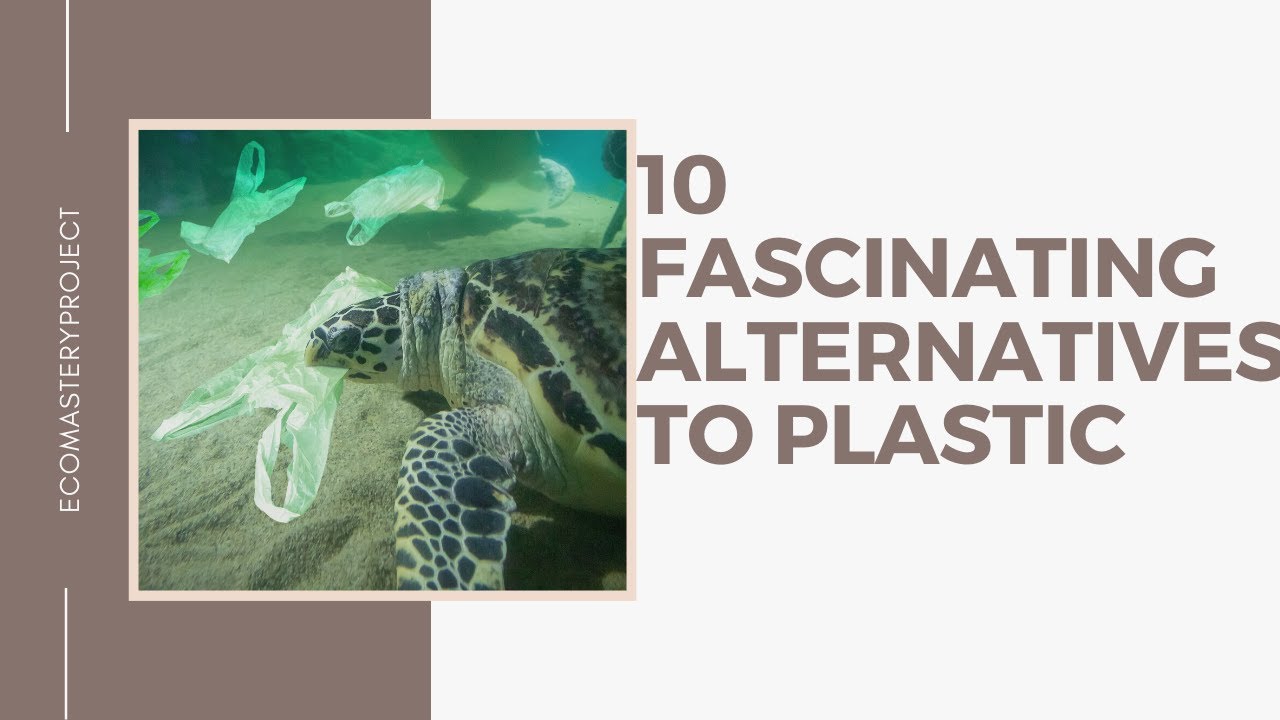

Top 10 Fascinating Alternatives To Plastic
Top 10 Fascinating Alternatives To Plastic
10 Fungus
Imagine if you could grow your own surfboard, urn, or furniture.
Fungus is invading the ecodesign industry, replacing materials like Styrofoam, protective packaging, insulation, acoustics, core materials, and even aquatic products.
9 Algae
Sustained by four simple ingredients—carbon dioxide, sunlight, water, and inorganic nutrients—algae are very reasonable in their dietary needs.
A bioplastic producer called Solaplast reveals that each pound of algae collected for production consumes approximately two pounds of carbon dioxide.
The process of creating this type of bioplastic requires breaking down harvested algae into tiny granules.
8 Potato Starch
Did you know that the starchy residue left over in the production of potato chips and french fries could be an eco-friendly ingredient in the composition of your bioplastic bag?
A company called BioLogiQ is successfully combining potato starches with polyurethane to produce plastic bags that are much stronger and thinner than entirely polyurethane-made bags.
7 Millets, Rice, WheatEdible Cutlery
Imagine if you could eat your cutlery right alongside your meal.
Bakeys Edible Cutlery, the future of eco-friendly utensils, has figured out the perfect combination of simple grains (and a touch of salt) to produce a nutritious alternative to landfill-bound plastic disposables.
6 Banana Tree
A resourceful new technique for ecoplastic production is blossoming from a surprising locale—the banana plantations of the Canary Islands and Uganda.
5 Leaf
Still in its Kickstarter phase, Leaf Republic has conceived of a method that turns fallen leaves into tableware.
4 Corn
Polylactic acid (PLA) is a substitute for plastic that is made from fermented cornstarch.
It has already hit the bio-based plastic market, albeit with its fair share of issues.
3 Cassava
Cassava grows abundantly in Southeast Asia, but don’t underestimate this cheap and common root vegetable.
A recipe combining vegetable oil, organic resins, and cassava starch promises a 100 percent biodegradable and compostable plastic alternative.
2 Shrimp Shells
Could the overabundance of crustacean shell waste in Egypt be the answer to the search for an eco-friendly plastic?
To make the bioplastic, the collected shrimp shells are boiled in acid to remove their calcium carbonate.
An alkaline substance is applied to produce the long molecular chain of which the biopolymer is comprised.
The dried chitosan is then dissolved and developed into a polymer, plastic-like film using conventional processing techniques.
1 Hemp
The natural fiber composite harvested from the Cannabis sativa L. stalks (aka hemp) is an affordable, biodegradable, recyclable, and toxin-free material.
Applications range from cordage to automotive parts, Styrofoam, and even resilient building materials.
Follow US!
Instagram
https://www.instagram.com/ecomasteryp...
Pinterest
https://www.pinterest.ca/ecomasterypr...
Facebook
https://www.facebook.com/Eco-Mastery-...
Twitter
https://twitter.com/ecomasterypro
Full article:
https://listverse.com/2018/03/....24/top-10-fascinatin